The New EdTech Sales Funnel: How to Build a Revenue Engine in 2026
Education is evolving rapidly, but the way many organizations sell their educational products is stuck in the past. Schools, universities, coaching organizations, and EdTech startups often rely on passive admissions strategies or disjointed marketing efforts. In 2026, having a great academic product is no longer enough to guarantee sustainable business development.
To survive and scale, education businesses need a structured, predictable pathway to turn prospects into enrolled students or active subscribers. They need a revenue engine.
Why Traditional Education Sales Strategies Are Failing
Historically, educational institutions relied heavily on brand legacy, word-of-mouth, and seasonal admission windows. However, the modern learner (and the modern parent) is overwhelmed with choices. They demand personalized experiences, immediate answers, and clear ROI on their educational investment.
If your sales or admissions team is still relying on generic email blasts and waiting for the phone to ring, your business is likely experiencing high lead acquisition costs and low conversion rates.
What is an EdTech Revenue Engine?
An EdTech Revenue Engine is a systematic, data-driven approach to sales and admissions that aligns marketing, lead management, and conversion optimization into a single, cohesive process. Unlike a traditional funnel that passively receives applications, a revenue engine proactively nurtures leads through specific stages—from initial awareness to final enrollment—using structured processes and performance tracking to guarantee predictable growth.
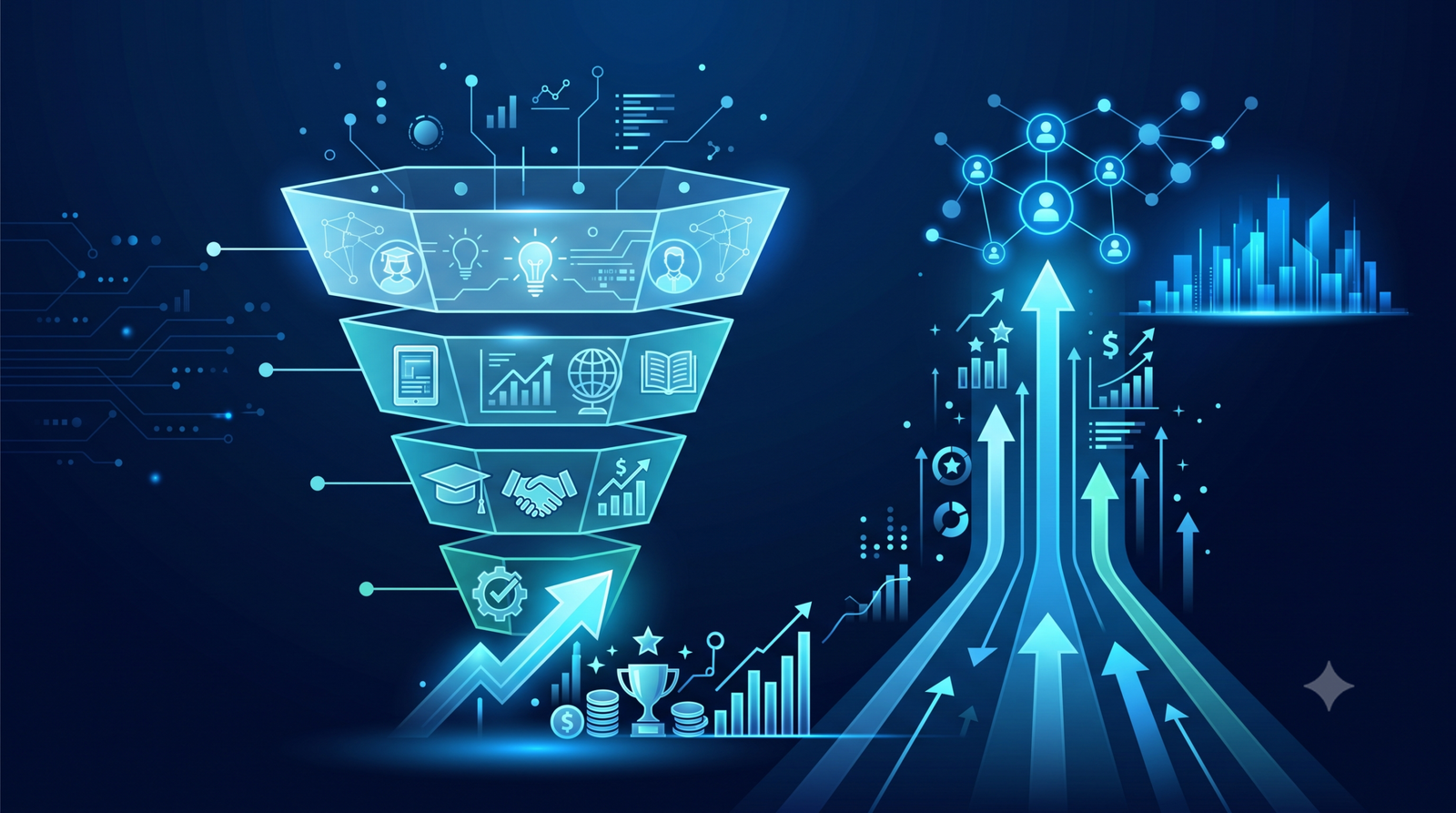
The 4 Stages of the Modern EdTech Sales Funnel

To build this engine, you must break down the student journey into manageable, measurable stages. Here is the framework we use to help education franchises and test prep organizations scale:
1. Awareness & Lead Generation
This is where your brand positioning meets your marketing strategy. The goal isn't just traffic; it's capturing qualified intent. Whether it's a parent looking for a K-12 curriculum or a professional seeking upskilling, your messaging must clearly articulate the educational outcome.
2. Lead Management & Nurturing
This is the most critical point of failure for most educational businesses. A lead is generated, but follow-up is slow or non-existent. A modern revenue engine utilizes CRM systems to score leads and deliver relevant academic content (like webinar invites, syllabus previews, or career outcome reports) before a sales conversation ever happens.
3. Admissions Strategy & Sales Process Design
Education sales are consultative. Admissions counselors or sales reps should act as educational advisors. This stage requires structured Sales Process Design, ensuring every rep knows exactly what questions to ask to uncover the learner's true motivations and objections.
4. Conversion Optimization & Enrollment
The final step is removing friction. How easy is it to pay? How transparent is the onboarding process? Optimizing this stage means analyzing drop-off rates at the final checkout or application submission page and streamlining the experience.
4 Steps to Optimize Your Admissions and Sales Process Today

If you want to transition from a passive funnel to an active revenue engine, start by implementing these four foundational steps:
- Map the Current Learner Journey: Diagnose your current business model. Document every touchpoint a prospective student has from the first ad click to the first day of class.
- Establish Lead Response Time SLAs: In EdTech, speed to lead is vital. Institute Service Level Agreements (SLAs) requiring your admissions team to contact new inquiries within minutes, not days.
- Invest in Team Enablement: Implement rigorous sales training and capability building. Your team must be experts not just in selling, but in the academic frameworks they are promoting.
- Track What Matters: Stop tracking vanity metrics. Focus on Cost Per Acquisition (CPA), Lead-to-Enrollment Conversion Rate, and Customer Lifetime Value (LTV).
Frequently Asked Questions
What is a good conversion rate for EdTech sales?
While it varies heavily by product type (B2B enterprise vs. B2C consumer), a healthy B2C EdTech lead-to-enrollment conversion rate typically ranges between 3% and 7%. High-ticket bootcamps or university degrees may see lower volume but higher conversion rates for highly qualified applicants at the bottom of the funnel.
How can coaching institutes improve lead conversion?
Coaching institutes can improve conversion by implementing structured lead management, offering free diagnostic assessments to demonstrate value immediately, and training their counseling staff in consultative sales techniques rather than pressure selling.
Why is sales strategy important for universities?
With increasing competition and alternative education models, universities must operate with a business mindset. A structured admissions strategy ensures they can attract the right demographic, maintain enrollment numbers, and secure the tuition revenue necessary to fund academic programs.
Ready to Build Your Next Stage of Growth?
If your EdTech company or educational institution is struggling with unpredictable revenue, BRQ Kaizen can help. We evaluate your business direction, strengthen your sales ecosystem, and establish the processes required for sustainable growth.
Explore Sales & Revenue Solutions